Starting with VA home loan, this paragraph aims to provide a captivating overview of the benefits, eligibility criteria, and application process, enticing the readers to delve deeper into the topic.
Advertisement




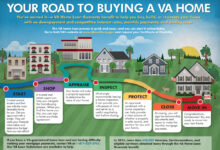

Exploring the different types of VA home loans, eligibility requirements, funding fees, interest rates, and more, this comprehensive guide covers all aspects of VA home loans in detail.
Overview of VA Home Loan
A VA home loan is a mortgage loan program specifically designed for veterans, active-duty service members, and eligible surviving spouses. This program is backed by the U.S. Department of Veterans Affairs, providing benefits such as no down payment or private mortgage insurance requirements.
Eligibility
To be eligible for a VA home loan, individuals must meet certain service requirements based on their military status. Generally, veterans, active-duty service members, National Guard members, reservists, and some surviving spouses may qualify for a VA home loan.
Advertisement
Benefits of VA Home Loan
- No down payment required, making homeownership more accessible for eligible individuals.
- No private mortgage insurance (PMI) needed, resulting in potential cost savings over time.
- Flexible credit requirements, allowing individuals with less-than-perfect credit histories to still qualify.
History and Purpose
VA home loans were established in 1944 through the Servicemen’s Readjustment Act, more commonly known as the GI Bill of Rights. The primary purpose of VA home loans is to help veterans, service members, and eligible spouses achieve the dream of homeownership as a token of appreciation for their service and sacrifice to the country.
Types of VA Home Loans
VA home loans offer different types to cater to the diverse needs of borrowers. Let’s take a closer look at the various options available and their unique features.
Purchase Loan
- Purchase loans are designed for buying a home or condominium.
- Can be used for primary residences.
- Does not require a down payment or private mortgage insurance (PMI).
Example: A veteran looking to purchase their first home without having to save for a down payment may benefit from a VA purchase loan.
Interest Rate Reduction Refinance Loan (IRRRL)
- Also known as a VA streamline refinance.
- Allows veterans to refinance an existing VA loan to obtain a lower interest rate.
- No appraisal or credit underwriting package required.
Example: A veteran with an existing VA loan who wants to take advantage of lower interest rates in the market may opt for an IRRRL to reduce monthly payments.
Cash-Out Refinance Loan
- Enables borrowers to refinance their home for more than the current outstanding mortgage balance.
- The excess funds can be used for various purposes, such as home improvements or debt consolidation.
- Requires a new appraisal and credit underwriting process.
Example: A veteran looking to renovate their home or pay off high-interest debt may find a cash-out refinance loan beneficial.
VA Home Loan Eligibility
To qualify for a VA home loan, individuals must meet specific eligibility requirements set by the Department of Veterans Affairs. This includes active-duty service members, veterans, and eligible spouses. Let’s delve into the details of each category below.
Advertisement
Active-Duty Service Members
Active-duty service members are eligible for VA home loans if they have served a minimum period determined by the VA, typically around 90 consecutive days during wartime or 181 days during peacetime. It’s important to provide proof of service through a Certificate of Eligibility (COE) to apply for the loan.
Veterans
Veterans who have been honorably discharged after serving a specific period in the military are eligible for VA home loans. The length of service required may vary depending on when the individual served. Veterans must also obtain a COE to demonstrate their eligibility for the loan.
Spouses
Spouses of service members who were killed in the line of duty or as a result of a service-related disability may qualify for VA home loans. Surviving spouses must meet certain criteria and provide necessary documentation to prove their eligibility for the loan.
Note: In some cases, National Guard and Reserve members may also be eligible for VA home loans if they meet specific requirements related to their service.
VA Home Loan Application Process
When applying for a VA home loan, it is important to follow a step-by-step process to ensure a smooth and successful application. Below are the detailed steps and tips to guide you through the VA home loan application process.
Step-by-Step Process
- 1. Obtain a Certificate of Eligibility (COE) from the VA.
- 2. Find a lender that participates in the VA home loan program.
- 3. Pre-qualify for a VA home loan to determine your budget and eligibility.
- 4. Submit a formal loan application with the lender of your choice.
- 5. Provide necessary documentation for income, employment, and credit history.
- 6. Wait for the lender to process your application and make a decision.
- 7. If approved, proceed with the loan closing process and sign the necessary paperwork.
Tips for a Smooth Application Process
- 1. Ensure all your documentation is accurate and up to date to avoid delays.
- 2. Be responsive to any requests for additional information from your lender.
- 3. Keep track of important deadlines and submit required documents promptly.
- 4. Work closely with your lender to address any issues or concerns that may arise during the process.
Documentation Needed for a VA Home Loan Application
- 1. Certificate of Eligibility (COE) from the VA.
- 2. Proof of income, such as pay stubs, W-2 forms, or tax returns.
- 3. Employment verification documents.
- 4. Bank statements and asset information.
- 5. Credit history and credit score information.
- 6. Documentation of any additional income sources, if applicable.
VA Home Loan Funding Fee
The VA home loan funding fee is a one-time fee paid to the Department of Veterans Affairs to help offset the costs of the VA loan program. This fee helps ensure that the program can continue to offer loans with no down payment required and favorable terms to eligible veterans, service members, and their families.
Calculation of VA Home Loan Funding Fee
The VA funding fee amount is based on several factors, including the type of loan, down payment amount (if any), and whether the borrower has used the VA loan benefit before. The fee is typically calculated as a percentage of the loan amount and can vary depending on these factors.
- For regular military borrowers:
- First-time use with no down payment: 2.30% of the loan amount
- Subsequent use with no down payment: 3.60% of the loan amount
Exemptions from Paying the Funding Fee
Certain individuals may be exempt from paying the VA funding fee, such as veterans receiving VA compensation for service-connected disabilities or those who are eligible for VA loan benefits as a result of a service-related disability.
Comparison of Funding Fee for First-time vs. Subsequent VA Loan Users
The funding fee for first-time VA loan users is typically lower compared to subsequent users who have already utilized their VA loan benefit. This is to incentivize individuals to use their VA loan benefit for the first time and provide additional support to those who have served multiple times.
VA Home Loan Interest Rates
When it comes to VA home loans, interest rates play a crucial role in determining the overall cost of borrowing. Understanding how these rates are determined, what factors can affect them, and how to secure the best rates is essential for anyone considering a VA home loan.
How Interest Rates for VA Home Loans are Determined
Interest rates for VA home loans are influenced by a variety of factors, including market conditions, the borrower’s credit score, and the overall economy. Lenders also take into account the loan amount, loan term, and the type of interest rate (fixed or adjustable) chosen by the borrower.
Factors Affecting VA Home Loan Interest Rates
- Market Conditions: Fluctuations in the financial markets can impact interest rates for VA home loans.
- Credit Score: Borrowers with higher credit scores typically qualify for lower interest rates.
- Economic Conditions: The overall state of the economy can influence interest rates for all types of loans.
- Loan Amount and Term: The size of the loan and the repayment term can affect the interest rate offered.
- Type of Interest Rate: Fixed-rate loans have stable interest rates, while adjustable-rate loans can fluctuate over time.
Tips for Securing the Best Interest Rates on a VA Home Loan
- Maintain a Good Credit Score: Improve your credit score by making timely payments and reducing debt.
- Shop Around: Compare interest rates from multiple lenders to find the best offer.
- Consider Points: Paying points upfront can lower your interest rate over the life of the loan.
- Lock in Your Rate: Once you find a favorable rate, consider locking it in to avoid potential increases.
- Negotiate: Don’t be afraid to negotiate with lenders to try and secure a lower interest rate.
VA Home Loan Limits
VA home loan limits refer to the maximum loan amount that a veteran or eligible service member can borrow using a VA loan. These limits help determine the amount of money that can be borrowed without requiring a down payment.
Calculation of VA Loan Limits
VA loan limits are calculated based on the “conforming loan limit” set by the Federal Housing Finance Agency (FHFA). In most parts of the country, the conforming loan limit is $548,250 for 2021. However, in certain high-cost areas, the limit can be higher.
Impact on Homebuying Decisions
The VA loan limits can impact homebuying decisions in several ways. For example, if a veteran is looking to purchase a home that exceeds the VA loan limit, they may need to make a down payment to cover the difference. This can influence the affordability of homes in certain areas and may require veterans to consider other financing options if the home price exceeds the VA loan limit.
VA Home Loan Closing Costs
When it comes to securing a VA home loan, it’s essential to understand the various closing costs that may be involved in the process. These costs can add up and impact the overall affordability of the loan. In this section, we will detail common closing costs associated with a VA home loan, compare them with other types of mortgages, and provide strategies for negotiating or reducing these costs.
Common Closing Costs for VA Loans
- Appraisal fees: This is the cost of having a professional appraiser assess the value of the property.
- Origination fees: These are charges from the lender for processing the loan application.
- Title insurance: This protects the lender and the buyer in case of any issues with the title of the property.
- Recording fees: These are charges for recording the deed and other legal documents.
- Prepaid expenses: This includes property taxes, homeowners insurance, and prepaid interest.
Comparison with Other Types of Mortgages
- VA loans typically have lower closing costs compared to conventional loans, as certain fees are prohibited or limited by the VA.
- FHA loans may have similar closing costs to VA loans, but they also require upfront mortgage insurance premiums.
- Conventional loans often have higher closing costs, including private mortgage insurance for down payments less than 20%.
Strategies for Negotiating or Reducing Closing Costs
- Shop around for different lenders and compare their fees and rates to find the best deal.
- Ask the seller to cover some or all of the closing costs as part of the negotiation process.
- Consider a “no-closing-cost” VA loan, where the lender covers the closing costs in exchange for a higher interest rate.
- Negotiate with the lender to waive certain fees or reduce the overall closing costs.
VA Home Loan Refinancing
Refinancing a VA home loan can be a beneficial option for homeowners looking to adjust their mortgage terms. It involves replacing an existing loan with a new one, usually to secure better interest rates or terms.
Options for Refinancing a VA Home Loan
There are two primary options for refinancing a VA home loan:
- Interest Rate Reduction Refinance Loan (IRRRL): Also known as a VA Streamline Refinance, this option allows borrowers to refinance an existing VA loan to obtain a lower interest rate without the need for a new appraisal or credit underwriting.
- Cash-Out Refinance: This option allows homeowners to refinance their existing mortgage for a larger amount than the current loan balance, receiving the difference in cash. This can be used for various purposes, such as home improvements or debt consolidation.
Benefits and Drawbacks of Refinancing a VA Loan
Refinancing a VA loan can offer several benefits, including:
- Lowering monthly mortgage payments
- Reducing interest rates
- Changing from an adjustable-rate mortgage to a fixed-rate mortgage
However, it’s essential to consider potential drawbacks such as extending the loan term, additional closing costs, and resetting the clock on paying off your home.
Scenarios for Refinancing a VA Loan
Refinancing a VA loan may be a good idea in the following scenarios:
- Interest rates have significantly dropped since the original loan was obtained.
- You want to switch from an adjustable-rate mortgage to a fixed-rate mortgage for stability.
- You need cash for a large expense and want to use your home equity.
VA Home Loan Default and Foreclosure
When it comes to VA home loans, defaulting on your payments can have serious consequences, including the possibility of foreclosure. It’s crucial to understand the implications of falling behind on your VA home loan and how to navigate the foreclosure process if it becomes necessary. Additionally, knowing how to avoid default and foreclosure altogether is key to maintaining financial stability and keeping your home.
Consequences of Defaulting on a VA Home Loan
- Failure to make timely payments on your VA home loan can result in damage to your credit score, making it challenging to secure future loans or lines of credit.
- Defaulting on a VA home loan may lead to the lender initiating foreclosure proceedings, which could ultimately result in the loss of your home.
- Foreclosure can have long-lasting effects on your financial well-being and may impact your ability to purchase another home in the future.
Steps Involved in a VA Home Loan Foreclosure Process
- The lender will typically send a Notice of Default if you fail to make your mortgage payments on time, giving you a specified period to catch up on payments.
- If you are unable to bring your loan current, the lender may proceed with a Notice of Sale, scheduling an auction to sell the property to recoup the outstanding debt.
- Once the property is sold at auction, you may be required to vacate the premises, and the lender will take possession of the property.
Tips for Avoiding Default and Foreclosure on a VA Home Loan
- Communicate with your lender as soon as you encounter financial difficulties to explore options such as loan modification or forbearance.
- Create a budget and prioritize your mortgage payments to ensure they are made on time each month.
- Consider seeking assistance from a HUD-approved housing counselor to explore alternatives to foreclosure and develop a plan to stay current on your mortgage.
VA Home Loan FAQs
Here are some frequently asked questions about VA home loans along with detailed answers to help borrowers better understand this type of loan:
What is a VA home loan?
A VA home loan is a mortgage option available to eligible veterans, service members, and surviving spouses that is guaranteed by the Department of Veterans Affairs.
Who is eligible for a VA home loan?
Eligibility for a VA home loan is typically based on military service, and requirements may vary. Generally, veterans, active-duty service members, National Guard members, reservists, and certain surviving spouses may be eligible.
What are the benefits of a VA home loan?
- Lower interest rates
- No down payment required
- No private mortgage insurance (PMI) required
- Flexible credit requirements
How do I apply for a VA home loan?
To apply for a VA home loan, you will need to obtain a Certificate of Eligibility (COE) and work with a VA-approved lender who will guide you through the application process.
What is the VA home loan funding fee?
The VA home loan funding fee is a one-time fee paid at closing, which helps offset the cost of the VA loan program to taxpayers. The fee varies depending on factors such as military category, down payment, and whether it’s your first time using the VA loan benefit.
What are the interest rates for VA home loans?
Interest rates for VA home loans are typically competitive and may vary based on market conditions, lender policies, and the borrower’s creditworthiness.
Are there limits on VA home loan amounts?
Yes, there are limits on the amount you can borrow with a VA home loan, which may vary by location. These limits are set by the VA and are intended to help borrowers purchase homes without requiring a down payment.
What are the closing costs associated with a VA home loan?
Closing costs for a VA home loan may include appraisal fees, title insurance, recording fees, and other expenses. However, the VA limits the types of fees that veterans are allowed to pay.
Can I refinance a VA home loan?
Yes, you can refinance a VA home loan through options such as the VA Interest Rate Reduction Refinance Loan (IRRRL) or a cash-out refinance, which allows you to access your home’s equity.
What happens if I default on a VA home loan?
If you default on a VA home loan, the VA may work with the lender to help you avoid foreclosure, but ultimately, the lender may foreclose on the property. It’s important to contact your lender as soon as possible if you are facing financial difficulties.
Where can I find additional resources for VA home loan inquiries?
For additional information and resources regarding VA home loans, you can visit the official Department of Veterans Affairs website or contact a VA-approved lender for personalized assistance.
Epilogue
In conclusion, VA home loans offer unique advantages for eligible individuals, providing a pathway to homeownership with favorable terms. By understanding the intricacies of VA home loans, borrowers can make informed decisions and navigate the process smoothly.

Contributing author focused on delivering fresh perspectives and timely information.